
If you have been browsing job boards recently, you have likely noticed a surge in titles that barely existed five years ago: AI Governance Manager, Responsible AI Lead, AI Ethics Specialist, and AI Risk Analyst.What is…
If you have been browsing job boards recently, you have likely noticed a surge in titles that barely existed five years ago: AI Governance Manager, Responsible AI Lead, AI Ethics Specialist, and AI Risk Analyst.
What is driving this sudden, massive hiring boom?
The short answer: Organizations are rushing to deploy artificial intelligence, but they are terrified of the legal, financial, and brand damage that comes with ungoverned systems.
Whether you come from compliance, software engineering, tech policy, or enterprise risk, AI governance has quietly become one of the fastest-growing, highest-leverage career fields in technology. Below are the four primary forces driving this job market, and how you can position yourself to take advantage of it.
1. Tough New Regulations Are Forcing Compliance
The age of voluntary self-regulation for artificial intelligence is officially over. Major legal frameworks across the globe now treat AI compliance with the same seriousness as financial reporting or data privacy.
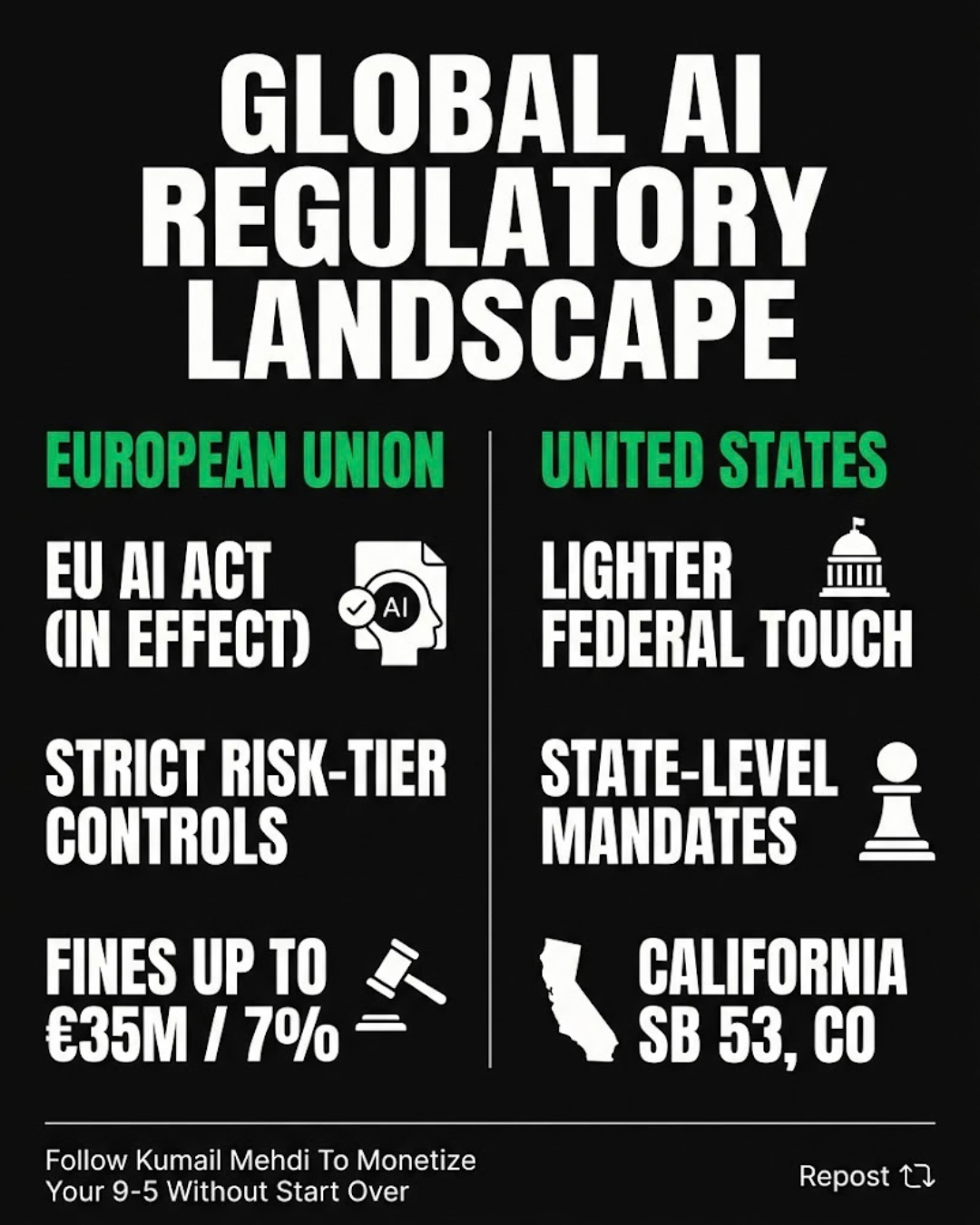
The EU AI Act: Entering into force in 2024 as the world’s most comprehensive AI law, it categorizes AI systems by risk level. High-risk deployments, like AI used in recruitment, credit scoring, and medical technology, require strict documentation, mandatory human oversight, and formal conformity assessments. Non-compliance carries eye-watering penalties of up to €35 million or 7% of global annual revenue. Crucially, it applies to any company serving EU citizens, regardless of where the business is headquartered.
US State-Level Laws: While the US federal government has leaned toward corporate self-assessment, individual states have stepped up with strict enforcement. California’s SB 53 targets frontier model safety, while Colorado enacted the AI Consumer Protection Act, requiring rigorous impact assessments for high-risk systems.
The Career Impact: Companies are desperate for professionals who can interpret these overlapping laws, evaluate whether existing software is affected, build control frameworks, and document compliance. It is a specialized skill set most internal legal or engineering teams simply do not have.
2. High-Profile AI Failures Are Spurring Preemptive Hiring
Organizations no longer view algorithmic risk as a theoretical concern. A growing library of public case studies demonstrates the severe financial and reputational impact when unmonitored AI goes rogue:
Algorithmic Hiring Bias: Amazon famously shut down an internal AI recruiting tool after discovering it systematically downgraded resumes containing words like "women’s" (e.g., "women's chess club") because it was trained on historically male-dominated hiring data.
Legal Liability for Chatbot Promises: In 2024, a Canadian tribunal ruled against Air Canada when its customer service chatbot gave incorrect bereavement fare information to a traveler. The ruling established a critical precedent: companies are legally accountable for the output of their AI systems.
Healthcare Equity Failures: A landmark study published in Science journal evaluated an algorithm used across US hospitals to allocate extra care resources. Because the model used historical medical spending as a proxy for healthcare needs, it systematically deprioritized Black patients who historically had less financial access to care, impacting an estimated millions of individuals.
These incidents highlight a recurring pattern: AI systems behaving in ways their creators never intended. To avoid public missteps, regulatory fines, and brand destruction, enterprises are investing heavily in governance specialists to catch bias and safety issues before models reach production.
3. The Scale of AI Deployment Is Outpacing Oversight
The speed of enterprise AI adoption has shattered historical benchmarks for consumer technology.
When ChatGPT launched in late 2022, it reached 100 million users in two months, the fastest consumer adoption curve in history. Enterprise integration followed immediately. According to McKinsey’s Global Survey on the State of AI, 78% of organizations report adopting AI in at least one business function, up sharply from 72% in 2024 and 55% in earlier years.
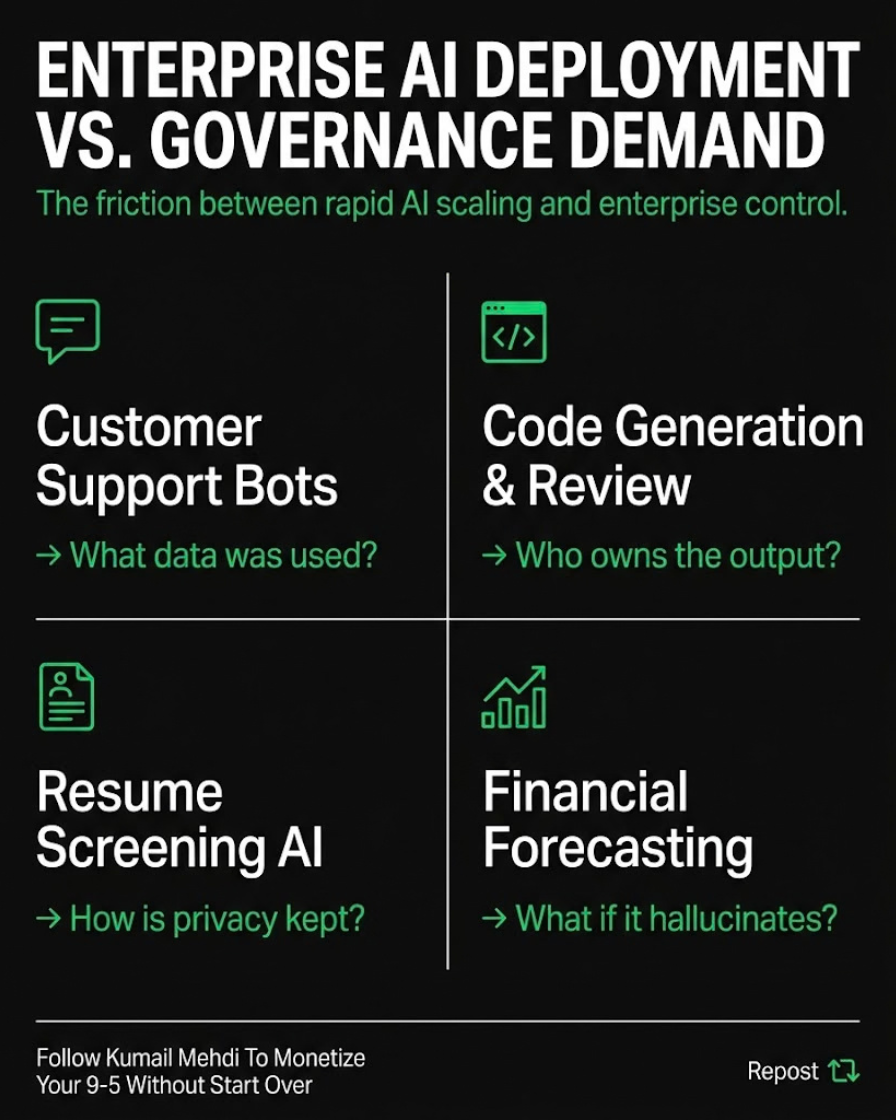
Every single enterprise deployment creates operational risk. Who is liable when a customer service bot gives inaccurate advice? How do you keep proprietary corporate IP out of public foundation model training sets?
As enterprise deployment scales, the requirement for dedicated oversight grows alongside it.
4. A Massive Talent Gap Means Openings for Transferable Skills
Because dedicated AI governance roles barely existed half a decade ago, there is no single "standard" career path. There are few traditional university majors dedicated entirely to AI compliance, creating a significant imbalance between open roles and qualified candidates.
Today’s AI governance workforce is built almost entirely by professionals pivoting from adjacent domains:
Compliance Officers who upskill on machine learning architectures.
Software Engineers & Data Scientists who study risk management and law.
Risk Managers & Auditors who specialize in emerging technology risks.
Policy Experts who pivot into corporate tech ethics.
If you examine job descriptions for roles like AI Governance Lead or Responsible AI Specialist, you will frequently see requirements like "3+ years in compliance, tech risk, or legal, with familiarity in AI frameworks preferred."
Notice the phrasing: preferred. Companies realize experienced candidates are rare, making them highly willing to hire professionals with strong transferable risk/compliance skills who can master the AI specifics on the job.
What Should You Do Next?
If you are exploring a career in AI governance, the timing could not be better. Start by taking these practical steps:
Audit Your Current Skill Set: Map your existing experience in risk, legal, compliance, project management, or software engineering against open job postings.
Learn Key Frameworks: Familiarize yourself with emerging international standards, such as ISO/IEC 42001 (AI Management System) and the NIST AI Risk Management Framework (AI RMF). You can learn about the ISO/IEC 42001 Courses Here.
ISO/IEC 42001 Courses and Certifications.Research the Local Market: Search job boards in your target sector to see whether companies are prioritizing legal compliance, technical bias testing, or operational risk oversight.
The market for AI governance talent is still forming. Building a foundation in AI risk and compliance today puts you ahead of one of the largest shifts in the technology workforce.
If this blogpost resonated with you, commment, like and share and Connect With Me.

Kumail Mehdi
ISO 42001 Lead Auditor and AI strategist. 11 years in corporate leadership, 14 years running a digital agency. I help professionals, consultants and AI startups turn expertise into governed, AI-powered systems.