Today, all eyes are on an extraordinary trilateral convergence: Donald Trump, Xi Jinping, and Vladimir Putin meeting on the sidelines of the Asia-Pacific Economic Cooperation (APEC) gathering in Shenzhen. Pundits have…
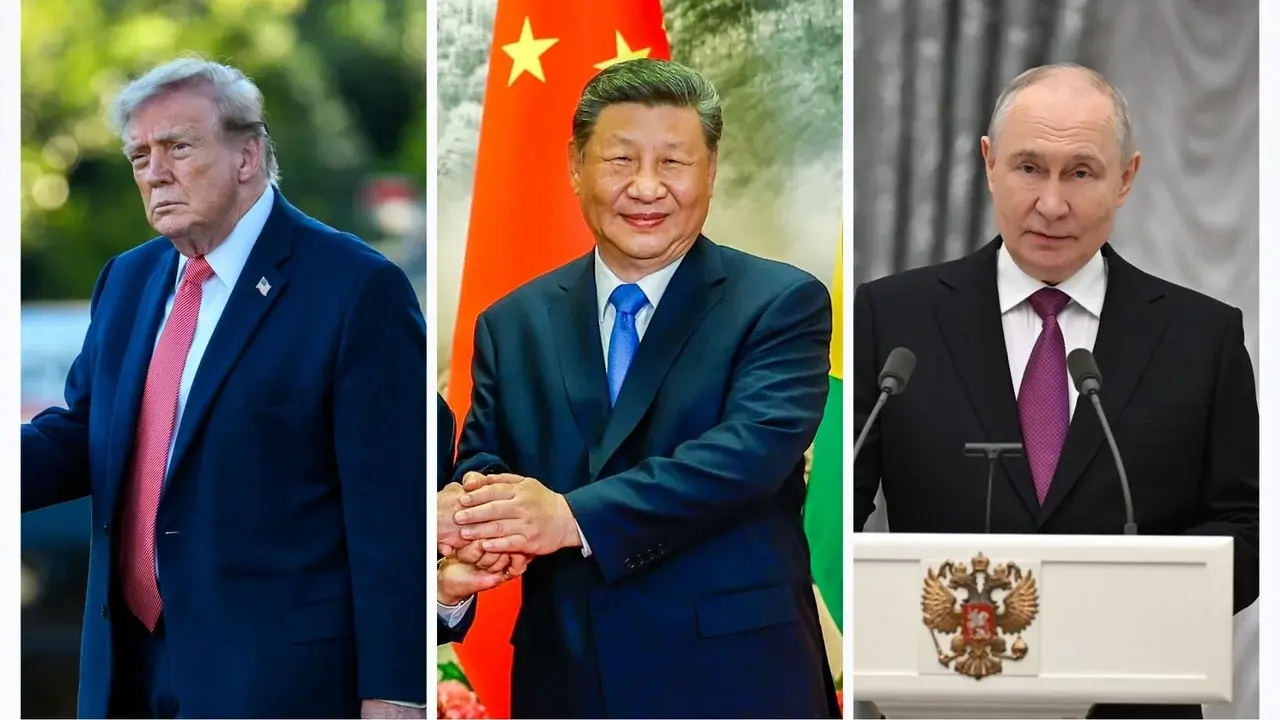
Today, all eyes are on an extraordinary trilateral convergence: Donald Trump, Xi Jinping, and Vladimir Putin meeting on the sidelines of the Asia-Pacific Economic Cooperation (APEC) gathering in Shenzhen. Pundits have been quick to label this high-stakes gathering "Yalta 2.0", a nod to the 1945 summit that divided the post-World War II world. Yet beneath the diplomatic theater, the most urgent item on the table isn't redrawing borders. It is preventing machines from triggering the end of civilization. Following the expiration of traditional arms treaties earlier this year, AI nuclear security and the battle to preserve 100% human oversight over N3 systems have emerged as the ultimate test of US-China-Russia relations.
The N3 Issue: Why We Must Stop "Algo Wars" Before They Start
At the heart of modern strategic stability lies N3, nuclear command, control, and communication. Till 2022, nuclear deterrence relied on rigid protocols, verified treaties, and human judgment. That guardrailed era ended with the February 2026 expiration of the New START treaty, leaving the world's largest nuclear arsenals without formal caps for the first time in over fifty years.
Into this treaty vacuum steps artificial intelligence. As Washington, Beijing, and Moscow race to modernize their defenses, integrating AI into early-warning satellites, missile defense, and command architectures presents a terrifying vulnerability: "Algo Wars." Unlike human commanders who can weigh political context and hesitate when sensor data looks ambiguous, automated algorithms operate at machine speed. A single glitch, spoofed signal, or misinterpreted radar blip could compress crisis decision-making from minutes into milliseconds, triggering an accidental, irreversible nuclear exchange.
To pull back from the brink, the three leaders face an imperative that transcends geopolitical rivalry: establishing a binding, verifiable commitment to 100% human oversight over nuclear launch and command decisions. Keeping a human finger firmly on the trigger, never delegating deterrence to fallible code, is the foundational guardrail of the 21st century.
The Tech Chokepoint: AI Hardware Meets Geopolitical Rivalry
You cannot separate the governance of military AI from the race to build it. The push for AI nuclear security collides directly with the fierce battle over global tech chokepoints, specifically the intricate semiconductor supply chains that power advanced machine learning.
Strict US-led export controls on cutting-edge microchips have squeezed Beijing's technological ambitions, even as the American and Chinese economies remain deeply intertwined. Amid ongoing scrutiny over illicit chip transfers and corporate controversies surrounding Nvidia, China is aggressively seeking access to advanced Nvidia chip designs and fabrication capabilities to fuel its domestic AI ecosystem. At the Shenzhen summit, silicon is no longer just an economic issue; because the same advanced chips that train commercial AI also drive military autonomy, semiconductor restrictions and AI safety guardrails have become inseparable bargaining chips.
Crisis Management Under Pressure: The Iranian Dilemma
The danger of automated escalation isn't merely theoretical—it is magnified by active global flashpoints. Looming over the late 2026 summit is the escalating crisis involving Iran, where intensifying hostilities and threats to vital maritime arteries like the Strait of Hormuz risk drawing major powers into a wider regional war.
For Donald Trump, Xi Jinping, and Vladimir Putin, the Iranian dilemma is a real-time stress test of crisis communication. Washington is managing direct military and domestic pressures, Beijing is desperate to protect Persian Gulf energy flows, and Moscow is angling for diplomatic leverage without overextending itself. In a high-tension environment where radars are hot and missiles are flying, even a minor miscalculation could spiral—underscoring why human-to-human diplomatic channels and human-controlled N3 systems are indispensable when regional crises boil over.
Yalta 2.0: Governing Existential Risk Without a "Big Three" Victory
Comparing the late 2026 meeting to the February 1945 Yalta Conference—where Franklin D. Roosevelt, Winston Churchill, and Joseph Stalin carved out post-war spheres of influence—highlights just how differently power operates today.
At Yalta, the Allied leaders negotiated from a position of total military victory over a common enemy. In 2026, there are no victors dividing the spoils. Instead, the Shenzhen table brings together three nations navigating deeply asymmetric pressures:
A rising power in China, pushing for technological parity and a greater voice in global governance.
A struggling power in Russia, strained by protracted conflict and economic isolation, relying heavily on its nuclear stature for relevance.
A challenged superpower in the United States, recalibrating global commitments amid domestic headwinds and overseas crises.
In a fractured, multipolar world where middle powers refuse to be sidelined and economic interdependence binds rivals together, "Yalta 2.0" cannot be about dividing the map. True statesmanship in 2026 means recognizing that while Washington, Beijing, and Moscow may never agree on spheres of influence, they share a survival interest in ensuring algorithms never hold the keys to the nuclear button.
Human Control Is Non-Negotiable: With the New START treaty expired, securing 100% human oversight over N3 (nuclear command, control, and communication) systems is the most urgent priority to prevent accidental "Algo Wars".
AI Safety and Chip Wars Are Linked: Global tech chokepoints—including US export controls and China's pursuit of Nvidia chip architectures—directly shape the AI capabilities and trust deficit between Washington and Beijing.
Live Crises Raise the Stakes: Escalating conflict surrounding Iran proves how quickly regional flashpoints can strain great-power communication, making human-in-the-loop safeguards vital.
A Different Kind of "Yalta 2.0": Unlike the 1945 Yalta Conference built on wartime triumph, the late 2026 summit between Donald Trump, Xi Jinping, and Vladimir Putin is an exercise in managing existential risk among a challenged superpower, a rising rival, and a struggling state.

Kumail Mehdi
ISO 42001 Lead Auditor and AI strategist. 11 years in corporate leadership, 14 years running a digital agency. I help professionals, consultants and AI startups turn expertise into governed, AI-powered systems.