When building artificial intelligence systems, the conversation usually starts with performance metrics, architecture, and deployment speed. But what happens to the ethical questions? Too often, terms like "fairness,"…
When building artificial intelligence systems, the conversation usually starts with performance metrics, architecture, and deployment speed. But what happens to the ethical questions? Too often, terms like "fairness," "transparency," and "accountability" remain vague buzzwords written in corporate mission statements rather than actionable items on an engineering backlog.
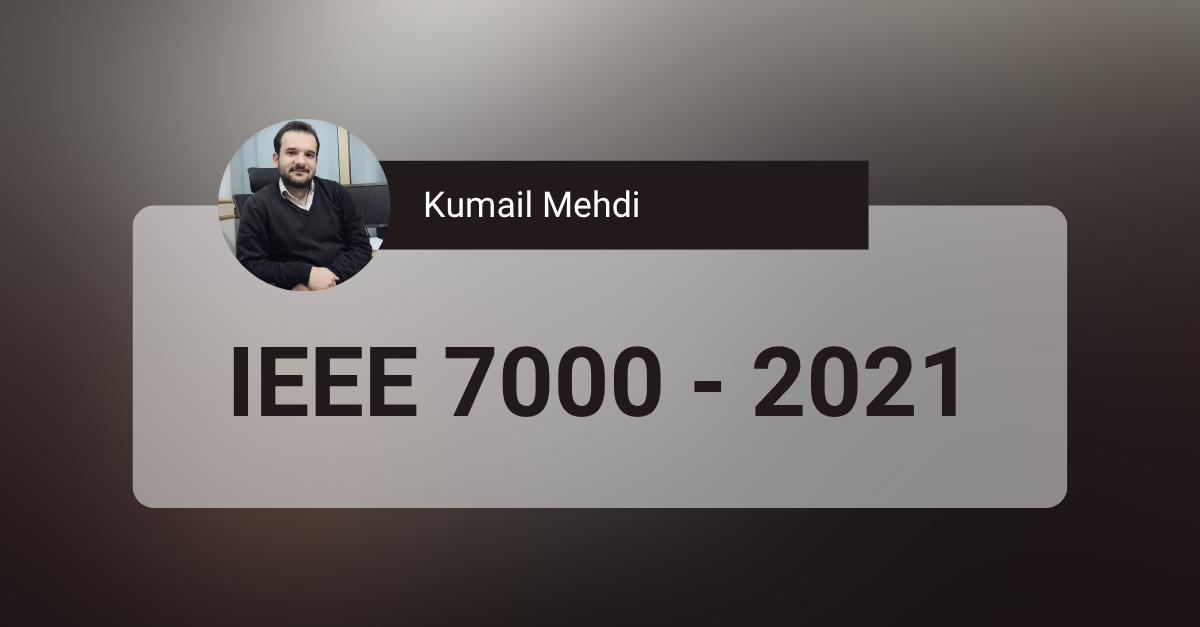
If you are an AI startup founder or an aspiring ISO 42001 consultant, bridging this gap between abstract ethical intent and rigorous system design is critical. Enter IEEE 7000, a standard model process that turns ethical values into traceable engineering requirements.
Let's explore how integrating IEEE 7000 into your workflow can supercharge your Artificial Intelligence Management System (AIMS) under ISO 42001 and ensure your AI products are built responsibly from day one.
Why Ethical Intent Needs an Engineering Process
It is easy for organizations to claim they value ethical AI, but without a systematic framework, those values evaporate the moment deadlines tighten. Teams need a repeatable process to handle stakeholder values just like they handle functional requirements.
According to the IEEE 7000 framework, ethical system design follows a structured 5-step lifecycle that transitions abstract principles into verifiable engineering tasks:
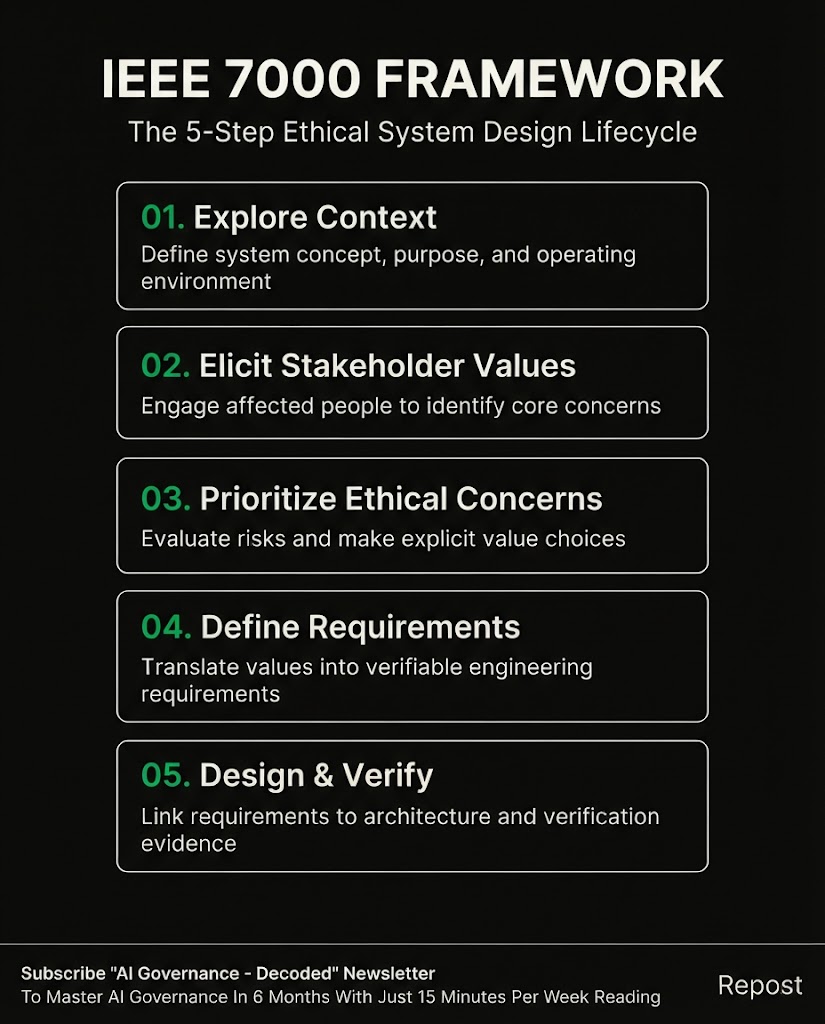
Explore Context: Define the system concept, purpose, operating environment, affected stakeholders, and relevant legal, social, and ethical conditions.
Elicit Stakeholder Values: Engage people who affect or are affected by the system to identify concerns, values, and potential conflicts.
Prioritize Ethical Concerns: Evaluate impacts and risks, then make explicit choices about which values the system must protect.
Define Ethical Value Requirements: Translate prioritized values into clear, verifiable requirements that engineering teams can use.
Design, Verify, and Trace: Link requirements to architecture, implementation, verification evidence, and ongoing system decisions.
How IEEE 7000 Complements ISO 42001 Compliance
For startups pursuing ISO 42001 certification—the international standard for Artificial Intelligence Management Systems (AIMS)—proving governance, risk management, and ethical accountability is a requirement, not a bonus.
While ISO 42001 provides the high-level management framework for governing AI responsibly, IEEE 7000 acts as the granular execution engine for operationalizing those values at the design level.
Proactive Risk Mitigation: Just as ISO 42001 mandates rigorous risk assessment, IEEE 7000 surfaces harms, conflicts, and blind spots early in the lifecycle—long before code is locked or design hardens.
Traceable Decision-Making: Auditors love traceability. IEEE 7000 ensures documented links among values, requirements, design choices, and verification evidence, giving your AIMS auditors clear proof of compliance.
Stakeholder Trust: By embedding community and user values directly into the engineering loop, startups can minimize regulatory pushback and build enterprise-grade trust.
Moving the Needle: From Theory to Practice
Adopting a dual approach using ISO 42001 for management controls and IEEE 7000 for system-level ethical design transforms how engineering and compliance teams collaborate. Ethics stops being a compliance afterthought and becomes a core engineering metric.
When you can trace an ethical requirement straight from an initial stakeholder interview down to a verified architectural decision, you aren't just checking boxes—you are building resilient, trustworthy AI systems ready for enterprise scaling.
Ready to Build Trust with Enterprise Clients?
Connect with me today to get your AI startup ISO 42001 certified and implement robust ethical design frameworks.
Subscribe to "AI Governance - Decoded" Newsletter to Master AI Governance With Just 15 Minutes Read Per Week.

Kumail Mehdi
ISO 42001 Lead Auditor and AI strategist. 11 years in corporate leadership, 14 years running a digital agency. I help professionals, consultants and AI startups turn expertise into governed, AI-powered systems.