The rapid acceleration of generative AI and frontier foundation models has shifted the global conversation from pure innovation to operational accountability. Backed by G7 leaders, the Hiroshima Process International…
The rapid acceleration of generative AI and frontier foundation models has shifted the global conversation from pure innovation to operational accountability. Backed by G7 leaders, the Hiroshima Process International Code of Conduct for Organizations Developing Advanced AI Systems stands as a cornerstone framework for navigating this evolution.
Whether you are an AI startup scaling your product line or an aspiring ISO 42001 / AIMS (AI Management System) consultant helping enterprises manage risk, understanding this code is no longer optional. It offers a blueprint for voluntary responsibility that bridges the gap between fast-moving tech innovation and global regulatory expectations.
What is the Hiroshima Process Code of Conduct?
First introduced in October 2023 under the Japanese G7 Presidency, the Code provides a non-exhaustive, living set of voluntary guidelines designed for organizations building advanced foundation models and generative AI systems. Rather than acting as a rigid, legally binding statute on day one, it outlines 11 core actions spanning the entire AI lifecycle—from initial design and training to post-deployment monitoring.
With the launch of the OECD-administered Hiroshima AI Process Reporting Framework transparency portal, major tech developers and enterprises are increasingly expected to demonstrate public accountability, aligning voluntary commitments with emerging international compliance structures like ISO/IEC 42001.
The 11 Core Actions at a Glance
The Code groups its recommendations into eleven actionable categories designed to mitigate systemic risks and foster trust:
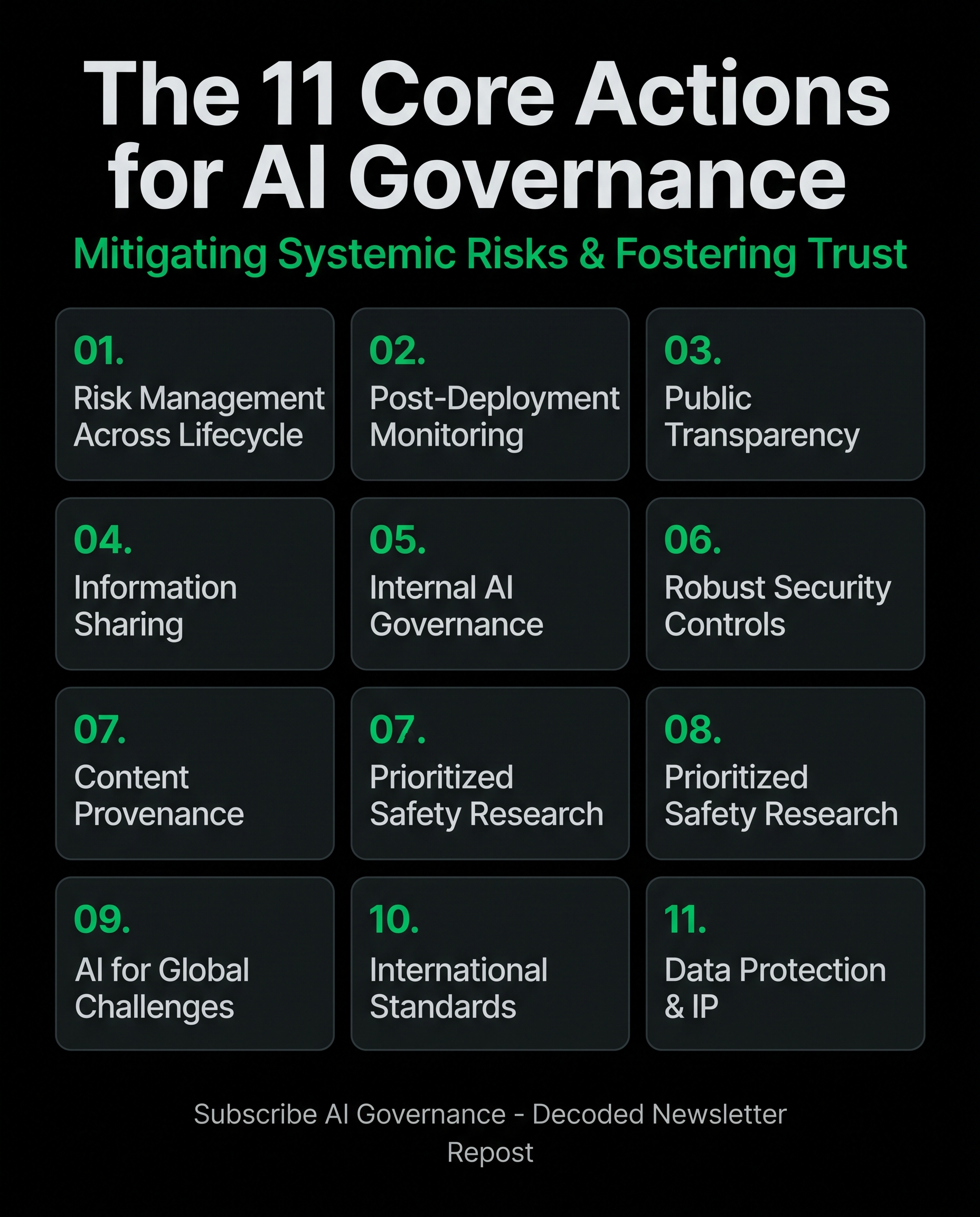
Risk Management Across the Lifecycle: Employ internal and independent external testing measures (such as red-teaming) to identify and mitigate chemical, biological, cyber, and societal risks before market placement.
Post-Deployment Monitoring: Track vulnerabilities and incidents post-launch, establishing accessible channels (like bug bounties) for responsible vulnerability disclosure.
Public Transparency & Reporting: Publish comprehensive transparency reports detailing model capabilities, limitations, and safety evaluations.
Information Sharing: Collaborate across industry, government, and academia to share safety risks, evaluation reports, and safeguard-circumvention patterns.
Internal AI Governance: Establish clear, risk-based internal policies, compliance frameworks, and staff training procedures.
Robust Security Controls: Implement strict physical and cybersecurity measures, including secure environments for model weights and insider threat detection programs.
Content Provenance & Authentication: Deploy technical mechanisms such as watermarking or digital labeling so users can readily identify AI-generated content.
Prioritized Safety Research: Invest in research addressing bias, misinformation, privacy protection, and environmental impacts.
AI for Global Challenges: Direct advanced AI development toward solving major crises, such as climate change, education, and global health in alignment with UN Sustainable Development Goals.
International Standards Adoption: Contribute to and adopt interoperable technical standards through recognized Standards Development Organizations (SDOs).
Data Protection & IP Safeguards: Manage training data quality to prevent harmful biases and respect privacy and copyright-protected intellectual property.
Why This Matters for ISO 42001 and AIMS Consultants
For organizations pursuing formal certification under ISO/IEC 42001, the world’s first international standard for Artificial Intelligence Management Systems, the G7 Hiroshima Code of Conduct provides a clear preview of what auditors and enterprise clients look for.
While ISO 42001 provides an auditable compliance structure, the G7 Code provides the practical operational behaviors. Alignment with these 11 actions helps startups demonstrate due diligence, lower liability, and build immediate trust with enterprise partners who demand certified, responsible AI practices.
Ready to Future-Proof Your AI Compliance?
Navigating global AI frameworks and aligning internal controls with ISO 42001 standards requires a structured approach.
Connect with me today to get your AI startup or consulting practice ISO 42001 certified and ready for enterprise scale.
Subscribe to "AI Governance - Decoded" Newsletter to Master AI Governance With Just 15 Minutes Read Per Week.

Kumail Mehdi
ISO 42001 Lead Auditor and AI strategist. 11 years in corporate leadership, 14 years running a digital agency. I help professionals, consultants and AI startups turn expertise into governed, AI-powered systems.